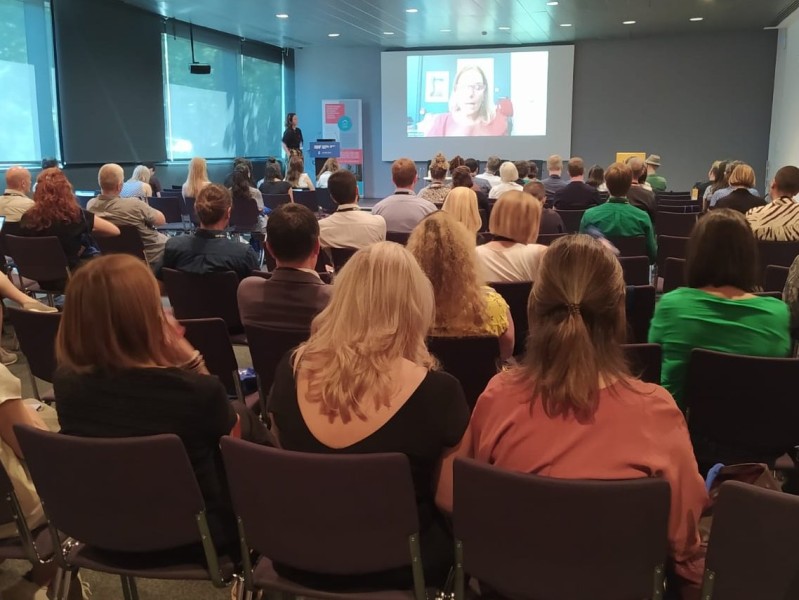
‘We can do it’ says Eleni (Lenio) Myrivili at the end of her introduction of ISHF – International Social Housing Festival 2023 side event ‘Climate justice in the Mediterranean.’ This is the hopeful conclusion of an alarming overview of how temperatures are rising, how it affects in particular vulnerable people and communities and what we can do.
What is happening? Last year was the hottest summer ever recorded. Last October was the warmest ever recorded. We’ve seen a heat wave in April. Global warming disproportionally hits this part of the world. The Mediterranean is heating up much faster than elsewhere.
Cities in the Mediterranean are unprepared for heat, as they were planned in the fossil fueled era. Because we had unlimited access to fossil fuel and disregarded the effect on global warming, cities could be built regardless of local circumstances, unaware of possible heat problems once we would disconnect from fossil sources.
The result is that in particular vulnerable people get affected by heat. Heat means inequality. If you have access to good housing, if you can afford air conditioning and if you live in green areas, the effect is limited. But if you can’t, in particular elderly, young children and fetuses suffer heat. Heat exaggerates symptoms. Not just physical, but mental problems as well.
In a broader sense, low income groups suffer energy poverty and cannot afford air conditioning, resulting in bad night rest and fatigue, resulting in less productivity. We need to protect them better.
Myrivili sees three solutions for our problems that we need to work on simultaneously. First we need to measure the problem better, to enable us to develop better insight and better policies. Second we should provide short-time solutions, for instance create public (indoor) spaces that people can move to if they experience heat problems at home. And finally we need to rethink how we build our cities. For instance we need to stop using impermeable building materials like asphalt, glass and metal and change to permeable ones, like clay, wood etc. It means using older techniques and local materials. ‘This is not difficult, we can do it,’ she concludes.
She is followed up by presenters from Spain, Greece and Portugal. In particulal Carles Oliver Barceló, who is an architect at the Institut Balear de l’Habitage (IBAVI), is inspirational. He shows a wide range of projects and materials, including stone, clay, wood, rammed earth blocks, demolition materials and ‘posidona oceanica’. And he concludes that architects should change their architectural language. Moving from the language of the international modernist style -which means working with concrete, glass and steel, all materials made with fossil energy- to the many architectural local styles in the world.
(this article is part of a series of blog articles for the ISHF live blog website, in collaboration with Housing Europe)
#homelessness #socialhousing #affordablehousing #ishf23 #volkshuisvesting
 Pepijns Post