Boulet‑frites is undeniably the most consumed dish in Liège, including in the university canteens. According to Perrine Neuprez and Sarah Robinet from the Université de Liège sustainability unit, half of the 4,000 warm meals served each day consist of this typical combination of meatballs and French fries (with a little lettuce, for decoration).
As part of the UNIC (European University of Cities in Post-Industrial Transition) Staff Week “Redesigning the Campus in the City,” both advisors presented the Liège university’s sustainability strategy to a group of campus experts from across Europe, including representatives from Cork, Oulu, Zagreb, Łódź, Brussels, Malmö, Liège, Bochum, and Rotterdam.
Neuprez and Robinet work according to a roadmap containing many measures, of which implementing sustainable canteens is just one. It is a challenging one, however, because changing people’s food options can feel like imposing a lifestyle on them.
Nevertheless, it was very necessary. Once the university had defined its ambition to offer more organic, more plant‑based, and more local food in its canteens, it discovered that its commercial partner could not, or did not want to, meet the new criteria. The university therefore made the bold decision to end the contract and run the canteens itself.
What followed was an interesting adventure. The commercial partner left the campus in December 2024, and new management was installed, reopening the canteens in January 2025. An existing, longlasting partnership with Liège Foodbelt, a local platform connecting food suppliers and consumers, enabled the new team to deliver locally produced ingredients. Next they hired a new chef who gradually incorporated organic and plant‑based ingredients into the dishes. They also engaged with students and staff to gather preferences and new recipes, and they improved working conditions and renewed the contracts of the canteen staff.
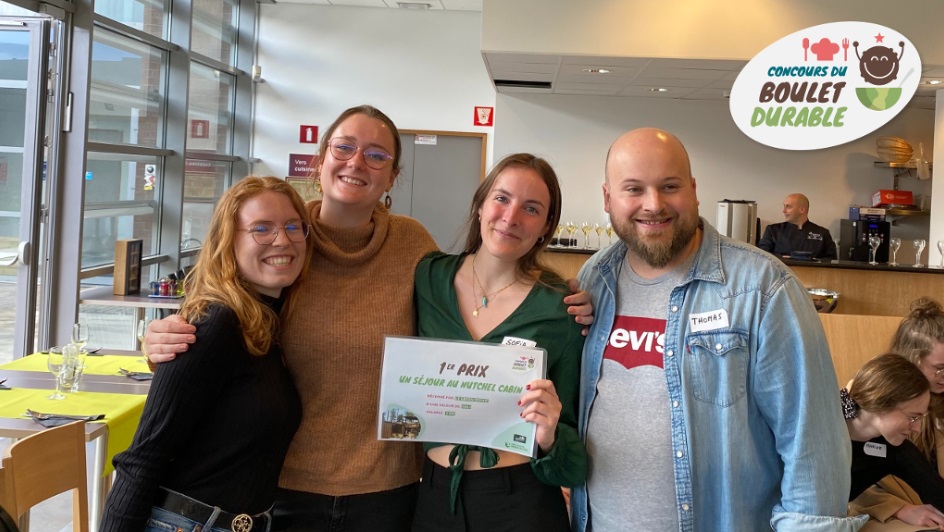
A highlight was the Concours de boulet durable, a competition among students and staff to create a new version of the typical Liégeois meatball dish. A professional jury of chefs and sustainability experts assessed five new boulet‑frites recipes, all containing local, organic ingredients and less meat. The winning boulet was more tasty and more sustainable than the original. This new boulet now functions as an alternative to the traditional boulet.
Transforming university canteens to become more sustainable is challenging but unavoidable. As universities prepare future professionals to tackle issues such as climate change, inequality, and diseases of affluence, they must also lead by example. Universities should therefore be frontrunners in sustainability, inclusion, and health. They should walk the talk, and eat organic.

